

Products
——
the
Key words:

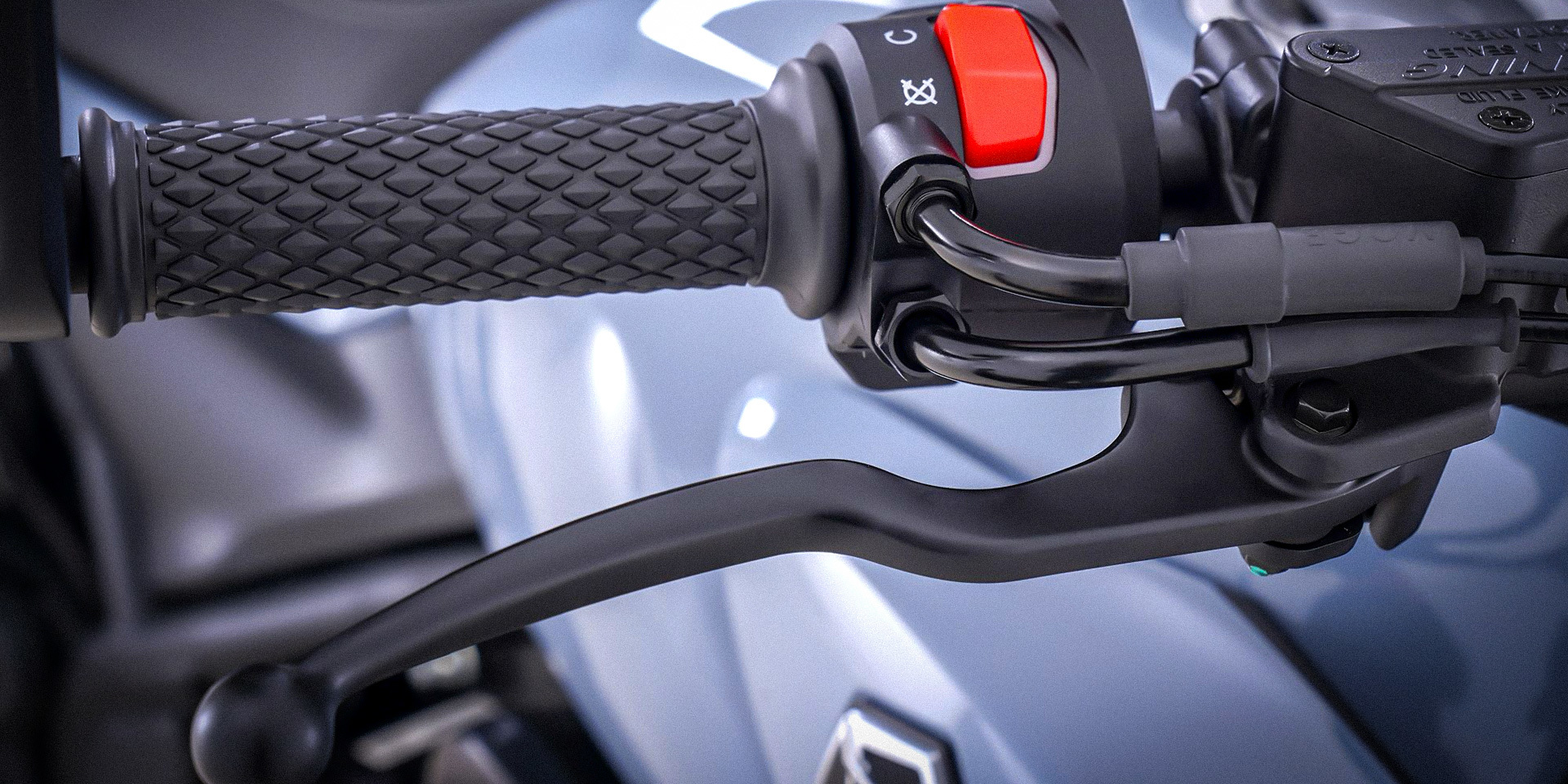
The electric vehicle throttle is the component that controls the speed of the electric vehicle. It outputs a continuously varying control voltage of different magnitudes based on the rider's speed requirements to drive the controller, achieving control over the speed of the electric vehicle. The electric vehicle throttle mainly consists of four parts: a linear Hall element, a reset spring, a magnet assembly, and a rotating handle, along with some auxiliary switches such as a three-speed switch, a cruise button, and a reverse switch. Among these, the linear Hall element and the magnet assembly are the core components of the throttle.
Key words:
When we turn on the power of the electric vehicle, the positive and negative power supply pins of the Hall element receive a 5V working power supply provided by the controller. When we rotate the throttle, the position direction of the magnet component fixed inside the handle changes, causing the magnetic field direction sensed by the linear Hall sensor to change from weak to strong. The Hall output will produce a varying voltage between 1 and 4.2V. Since this voltage is relatively low, it cannot directly drive the motor. This voltage is provided to the operational amplifier of the controller for comparison with a set value. Based on the comparison result, a voltage value is output to drive the field-effect transistor (FET). The FET is connected to the power supply, and when it conducts, it outputs voltage to drive the electric vehicle motor to rotate.
Key words:
Latest Products
chongqing liguang switch co., ltd
Our long-term cooperation with our customers is based on mutual benefit, mutual benefit and mutual trust. To create a win-win situation, is willing to sincerely cooperate with people from all walks of life, common development, hand in hand to create brilliant.
Telephone: Miss Cai +86 13758837551
E-mail:mail@chinaliguang.com
Address: Area B, Luohuang Industrial Park, Jiangjin District, Chongqing
Document Information Query|Certificate Report Query|Join Application|Recruitment Management
Mobile website